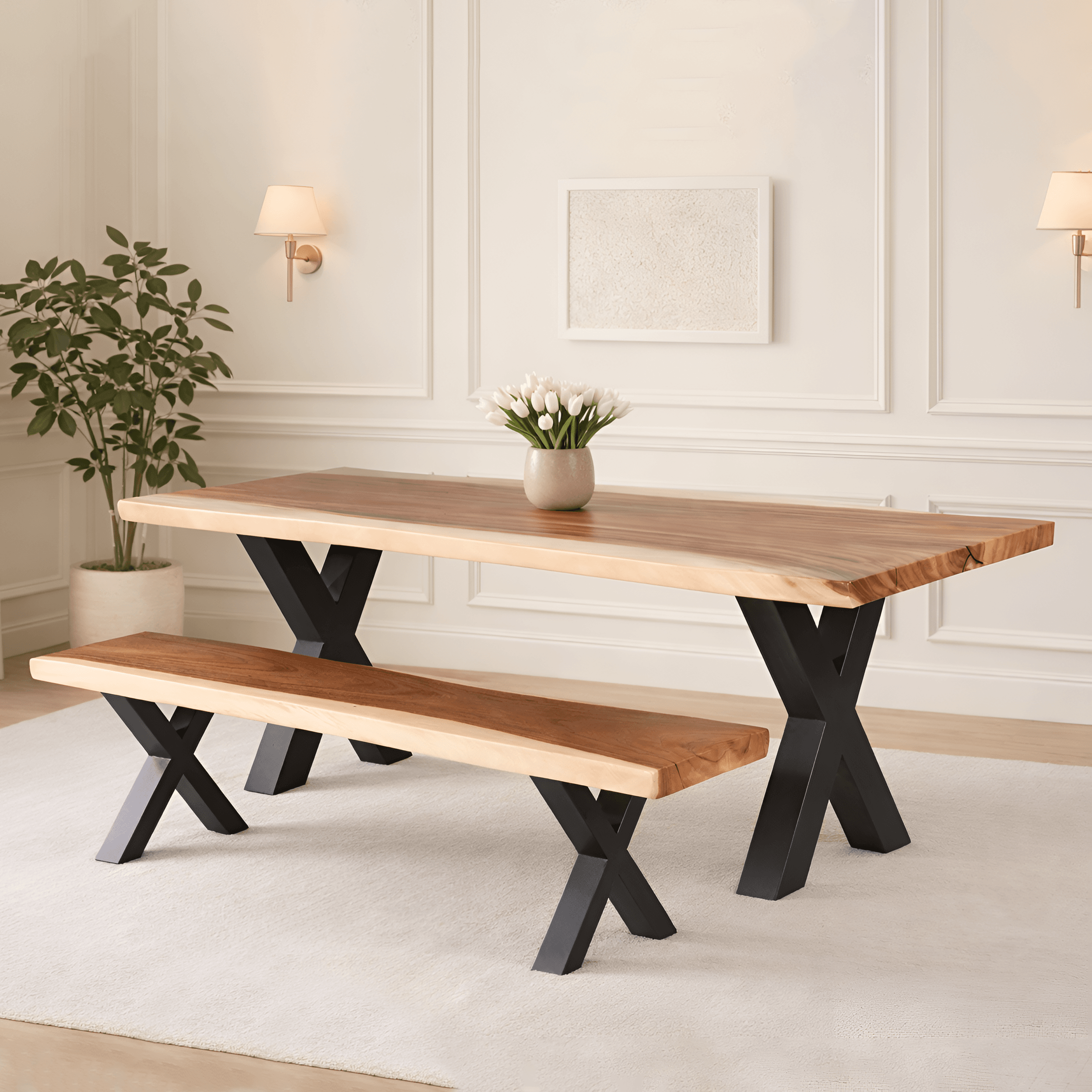
When choosing furniture, one of the most important decisions is the type of material used. Solid wood and engineered wood are two of the most common options, but they offer very different characteristics in terms of appearance, durability, stability, maintenance, customization, and price.
Solid wood is made from natural timber, giving each piece its own grain patterns, texture, and character. Engineered wood, meanwhile, is manufactured by combining wood fibres, particles, or veneers to create a more consistent and controlled material.
So, which one is right for your home? The answer depends on your interior, lifestyle, budget, and what you expect from your furniture in the long term.
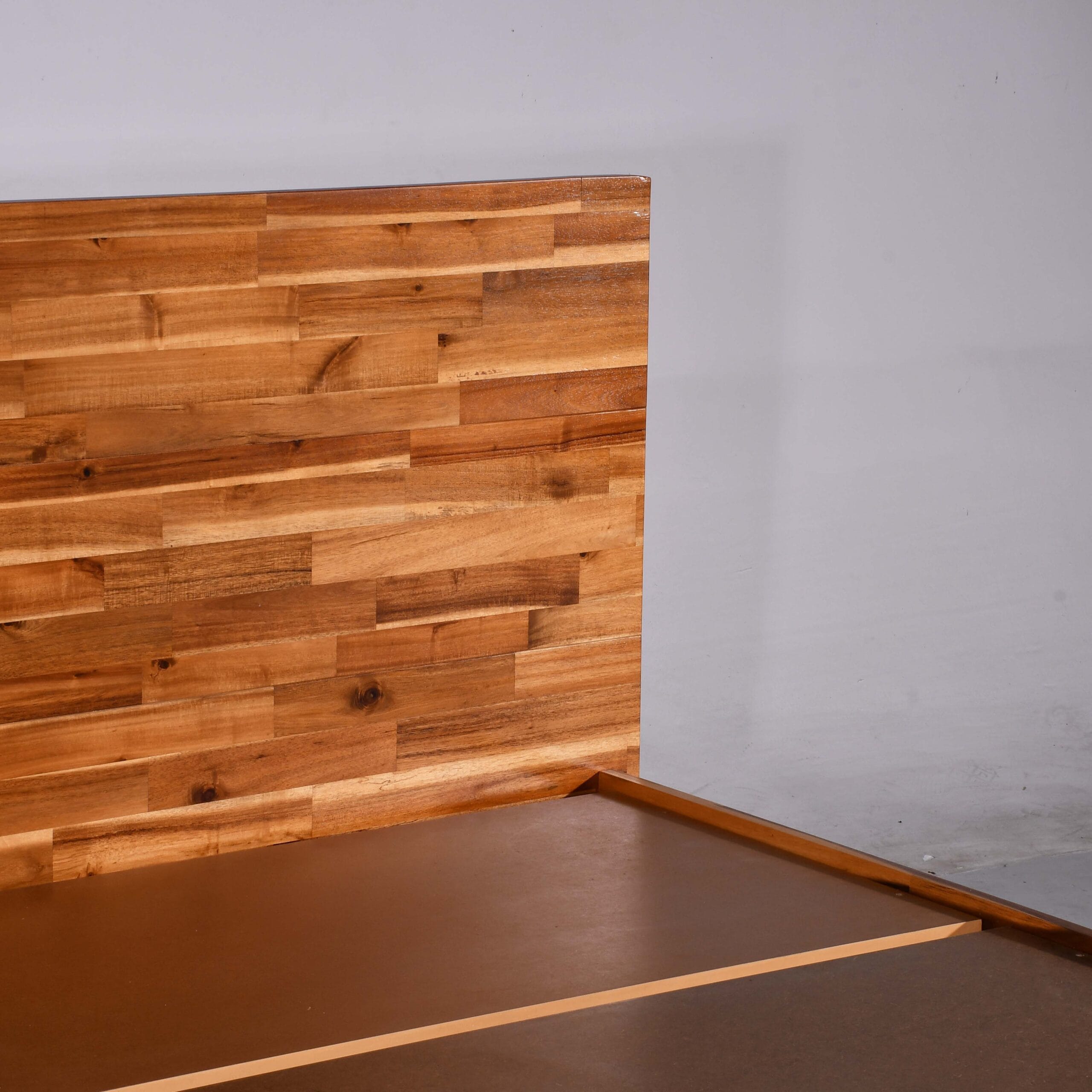
Solid wood

Engineered wood
What is solid wood?
Solid wood furniture is made from natural timber rather than manufactured wood fibres or particles. Depending on the species, solid wood exudes distinctive grain patterns, natural colour variations, knots, and other characteristics which make every piece unique.
Solid wood is commonly used for dining tables, beds, cabinets, coffee tables, and other furniture where durability and natural character are important.
With proper wood selection, drying, construction, finishing, and maintenance, quality solid wood furniture can remain functional and attractive for many years.
If you are new to solid wood furniture, read our Ultimate Guide to Solid Wood Slab Tables in Malaysia for a more detailed overview of wood species, table selection, maintenance, and other important considerations.
What is engineered wood?
Engineered wood refers to wood-based materials that are manufactured by combining wood fibres, particles, layers, or veneers using adhesives under controlled manufacturing processes.
Common examples include MDF, particleboard and plywood. These materials are widely used in modern furniture because they can offer a consistent appearance, predictable dimensions, and more accessible price points.
Engineered wood is particularly common in cabinets, wardrobes, shelving, desks, and mass-produced furniture where consistency and cost efficiency are important.
The quality of engineered wood furniture can vary considerably depending on the type and grade of board, surface finish, construction method, and hardware used.
Solid Wood vs Engineered Wood: Key Differences
| Factor | Solid Wood | Engineered Wood |
| Material | Made from natural timber throughout | Made from wood fibres, particles, or veneers |
| Appearance | Unique grain patterns, natural colour variations, knots, and texture | More consistent and uniform appearance
|
| Durability | Highly durable when properly dried, constructed, finished, and maintained | Durability varies depending on board type, quality, and construction |
| Lifespan | Can last for decades and may be refinished when worn | Has a shorter refurbishment potential; depends on material and finish |
| Stability | Naturally expands and contracts with changes in humidity | More dimensionally consistent, but can still be affected by moisture |
| Maintenance | Requires basic care; some surfaces can be sanded and refinished | Easy to maintain, but damaged surfaces can be harder to repair |
| Customisation | Highly customisable in size, shape, slab selection, finish, and base design | Suitable for standardised dimensions and certain custom furniture applications |
| Price | Generally higher due to natural timber, preparation, and craftsmanship | Generally more affordable and cost-efficient |
| Best suited for | Dining tables, statement furniture, long-term investment pieces, and customised furniture | Cabinets, wardrobes, shelving, desks, and budget-conscious furniture |
Which Should You Choose?
There is no single answer – the right material ultimately depends on your priorities
Choose solid wood if you:
- Prefer natural timber and unique grain patterns
- Want a furniture designed for long-term use
- Value customisation and craftsmanship
- Prefer furniture that can potentially be refinished
- Want a statement piece with natural character
Choose engineered wood if you:
- Prioritise affordability and cost efficiency
- Prefer a consistent and uniform appearance
- Need standardised furniture dimensions
- Are furnishing multiple spaces cost-effectively
- Prefer a practical solution for certain cabinetry or furniture applications
For many homeowners, the decision ultimately comes down to whether they prioritize natural character and longevity or consistency and affordability.
Why Choose XIMU Furniture?
At XIMU, we believe good furniture should balance function, design, and quality. While solid wood remains an important part of our collections, we also recognize that different designs and applications require different materials.
We carefully select materials based on the intended function and design of each piece. Solid wood brings natural character, durability, and warmth to furniture such as dining tables and wood slab pieces, while MDF with veneer allows us to achieve clean lines, contemporary forms, and design-specific details without compromising on quality.
Our approach is not simply about using more solid wood—it is about using the right material for the right purpose. This allows us to create furniture that feels contemporary, functional, and timeless, while still retaining the warmth and character of natural materials.
From solid wood slab tables to modern bedroom, living, and dining collections, XIMU combines thoughtful design with carefully selected materials and craftsmanship to create furniture made for the way people live today.
If you’re looking for thoughtfully designed furniture in Malaysia, explore our collections on www.ximu.my or visit our Puncak Alam showroom to experience them in person.
Final Thoughts
Both solid wood and engineered wood have their place in modern furniture, and neither material is universally better than the other. Solid wood offers natural character, durability, and the potential for customization and refinishing, while engineered wood provides consistency, practicality, and cost efficiency.
The right choice ultimately depends on factors such as your budget, intended use, interior style, maintenance expectations, and the type of furniture you are looking for.
By understanding the differences between the two, you can make a more informed decision and choose a material that suits your space, lifestyle, and priorities.